
Thermal Imaging Leak Detection Beaumont CA Without Cutting
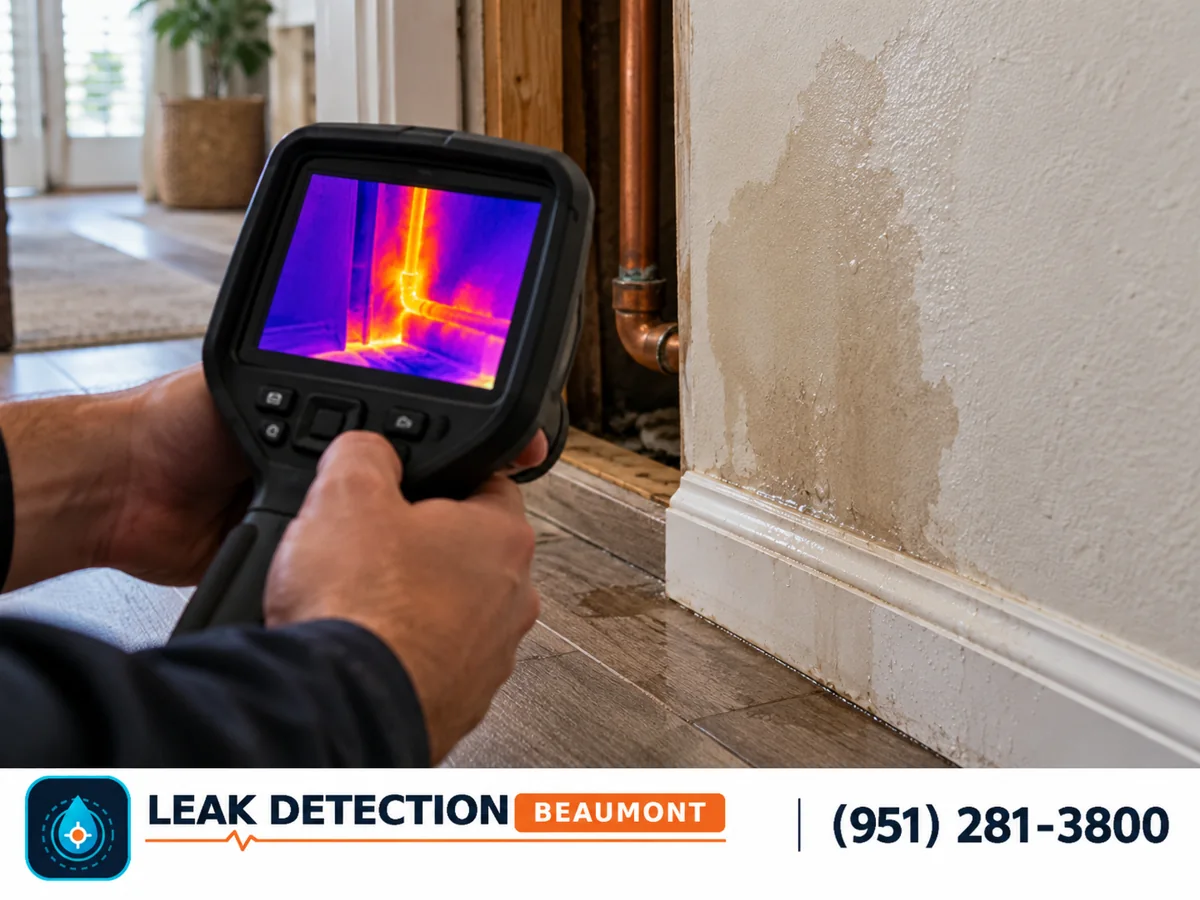
Thermal imaging leak detection in Beaumont, CA uses an infrared camera to show temperature changes caused by hidden water in walls, ceilings and floors. It lets us see the shape of a wet area without cutting anything, then we confirm with moisture meters and pinpoint the source. Call (951) 281-3800.
A thermal image is a map, and a map needs a destination. This page is for owners in Olivewood, and for buyers, sellers or claimants as far away as Redlands who need a clear picture of where water has spread.
What Thermal Imaging Leak Detection Includes
An infrared scan is only the start. Here is how it fits into a full visit.
A Full Infrared Scan of the Problem Area
We scan walls, ceilings and floors with an infrared camera, looking for cool or warm patterns that do not belong.
Moisture Meter Confirmation
A moisture meter checks each flagged area. Thermal shows temperature, and the meter confirms that water is the cause.
Photos With Temperature Notes
Each image is paired with a normal photo and a note on the temperature range, so the findings are easy to follow.
Acoustic Gear When the Source Is Hidden
If the wet area is far from the leak, listening gear helps follow the water back to the pipe.
A Report You Can Hand Over
The report collects thermal photos, readings and notes in one place for your plumber, insurer or agent.
Why Thermal Imaging Leak Detection Matters in Beaumont
Beaumont homes with drywall, tile and slab floors hide water well. Big swings between hot afternoons and cool nights at 2,600 feet also change how thermal scans read, so timing the scan right matters.
- Surfaces that hide water: Drywall, tile and concrete look dry on top, while the material behind them stays wet.
- Temperature swings: Hot afternoons and cool nights shift how quickly wet areas warm or cool, which affects contrast.
- Hot lines show clearly: Heat from a leaking hot line stands out on a thermal image, while cold lines may need a second tool to confirm.
- A non destructive approach: Nothing is opened, which suits finished floors, new paint and rooms you do not want to disturb.
How a Thermal Leak Scan Works Step by Step
We use the same five steps as every other service, with an extra focus on setting up the right temperature contrast before the scan begins.
- Call and describe the problem: Tell us what you see, from an unexplained stain to a pre purchase concern. We note the time of day and give you a price range.
- Inspect and test the property: We set up contrast by running hot water or choosing the right time, then scan walls, ceilings and floors.
- Pinpoint the exact spot: Each flagged area is checked with a moisture meter, and we trace the source with listening gear if needed.
- Review the report and quote: You receive thermal and standard photos, with notes on the source and repair options explained plainly.
- Repair and clean up: A licensed California plumbing contractor can complete the fix once the source is confirmed.
Problems a Thermal Scan Helps Solve
Infrared works best when you do not know where to look. These are the situations where it earns its keep.
- Unknown damp areas: A scan outlines the wet shape so we know where to test next.
- Stains with no clear source: A ceiling or wall stain can come from several places, and thermal narrows the options.
- Warm floor spots: Hot water leaks show up clearly through tile and wood.
- A moisture inspection in Beaumont before you buy: An infrared scan for a home buyer can reveal water issues before closing.
- Insurance documentation: A thermal leak scan for insurance gives the claim a clear visual record.
What a Thermal Leak Scan Costs
Thermal scans are often part of a standard detection visit, so you do not pay a separate price in most cases. National detection pricing is about $150 to $600 (This Old House, 2026), and we explain the price by phone before booking.
| What Affects the Price | How It Changes the Number |
|---|---|
| Area to be scanned | A single room is quicker than a whole floor |
| Follow up testing | Moisture meters or listening gear may add time |
| Documentation needs | A report for insurance or a sale may take longer |
After the Scan: Finding the Source and Fixing It
Thermal shows where water is, and then we confirm where it came from. The repair depends on the source we find.
- Pipe leak in a wall or floor: A small opening and a pipe or fitting repair.
- Fixture or drain source: A gasket, valve or seal replacement.
- Roof or window cause: A hand off to the right trade, with the evidence in hand.
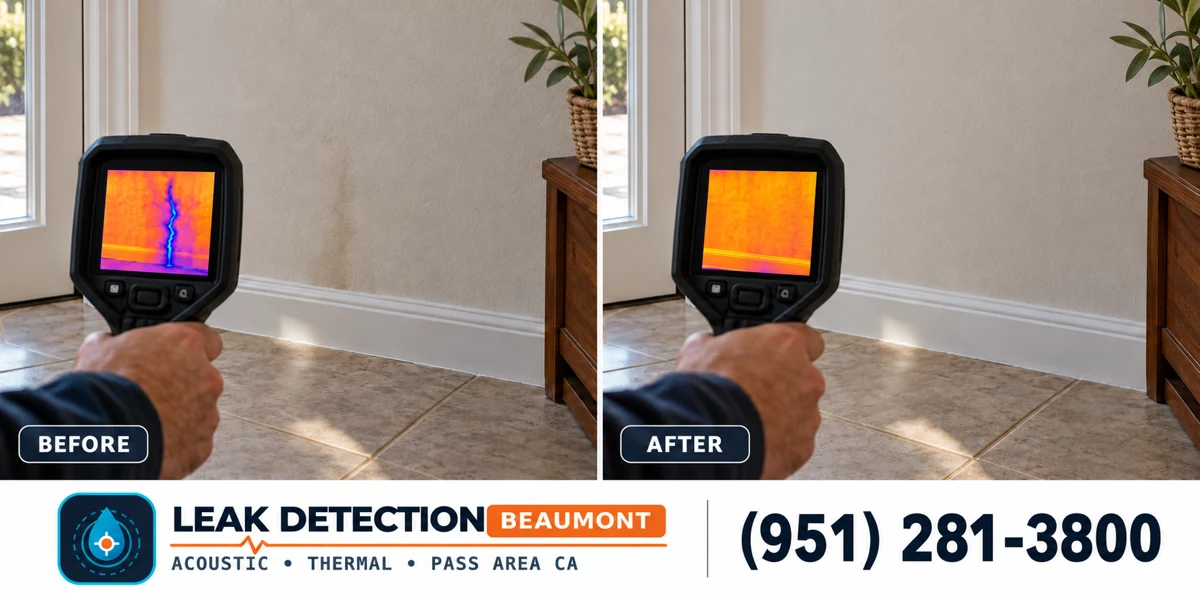
Infrared Photos, Before and After
The matched views below show the diagnostic area and targeted repair for Thermal Imaging Leak Detection from the same angle.
A Fully Non Contact Visit
A thermal scan does not need to open anything. The camera reads surfaces from a distance, and your photos stay with you. Here is what that means in practice.
- Nothing opened or removed during the scan
- Furniture left in place where possible
- Photos and readings shared only with you
- A calm, quiet visit
Services That Build on a Thermal Scan
Thermal imaging pairs well with other tests. These two are the closest match.
- Hot Water Slab Leak Detection: Uses the heat trail to follow hot lines under floors.
- Wall Leak Detection: Combines infrared with fixture isolation to find the pipe behind drywall.
Connected resources and nearby coverage include leak detection in Beaumont CA, hidden water leak detection, emergency leak detection, and slab leak detection.
Thermal Imaging Questions Answered
It sees temperature changes that water causes, not the water itself. A wet spot shows cooler or warmer than dry material around it. We confirm with a moisture meter before calling it a leak.
Not on its own. It shows where water has spread, but the source can be some distance away. We pair it with moisture readings, pressure tests and acoustic gear to mark the actual leak.
Yes. Our report includes thermal photos, moisture readings and notes on the source, which many insurers find helpful when reviewing a water damage claim.