
Pool Leak Detection Beaumont CA: Leak or Evaporation?
Pool leak detection in Beaumont, CA checks whether your pool is leaking or just evaporating, then pinpoints the leak. We bucket test, pressure test every plumbing line, dye test the skimmer, lights and fittings and listen with a hydrophone, so you fix one spot instead of guessing. Call (951) 281-3800.
If your pool is losing water and you cannot tell why, this page is for you. It is written for owners across Beaumont, Highland Springs and the wider Pass Area who want a straight answer before spending money on repairs.
What Pool Leak Detection Includes
A pool has a shell, an equipment pad and buried lines, so one test cannot cover it all. Here is what we check on a standard visit.
Bucket Test
We set up a bucket test first to rule evaporation in or out. If the pool drops faster than the bucket, the leak search begins.
Equipment Pad Check
We look at the pump, filter, heater, valves and autofill for drips, air leaks and wet soil.
Line Pressure Testing
Skimmer, main drain and return lines are each plugged and pressure tested on their own to see which one loses pressure.
Dye Testing the Shell
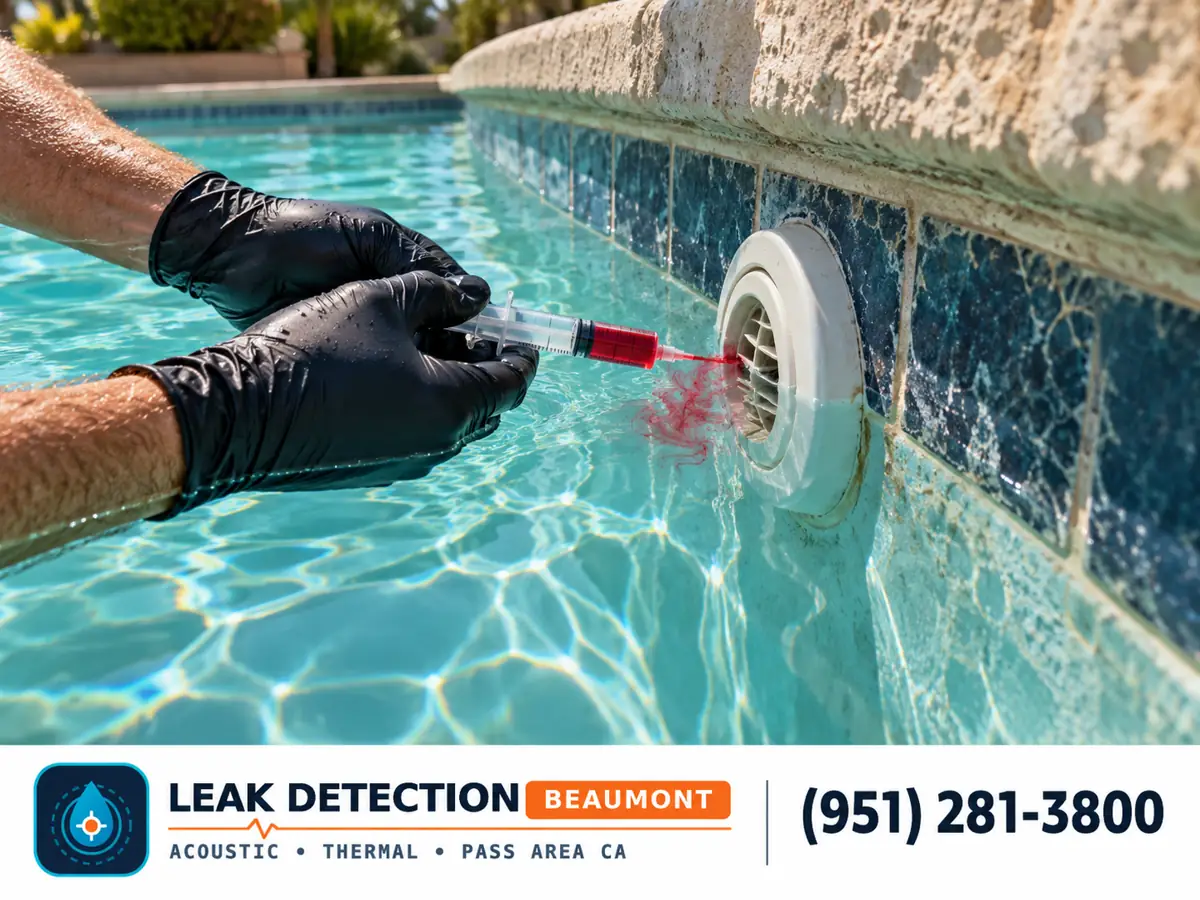
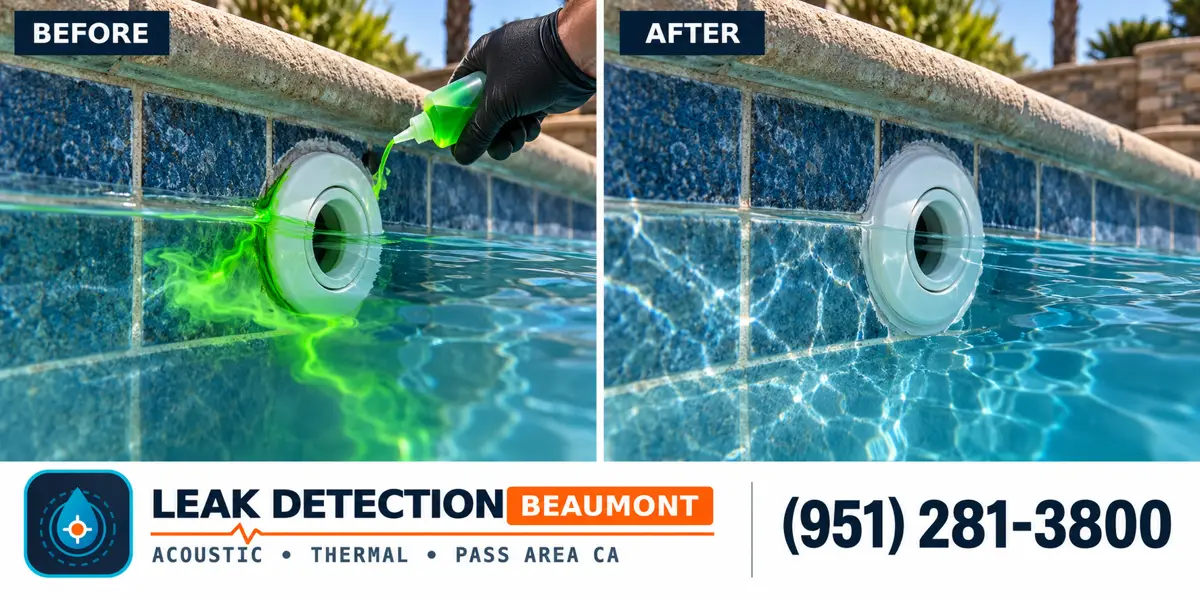
Dye is released near cracks, lights, tile lines and fittings. If it gets pulled toward a spot, water is leaving there.
Hydrophone Listening
For lines under the deck, a hydrophone and ground mic pick up the sound of water escaping so we can mark the spot.
Report With Photos
You receive photos, test results and repair options so you know what to fix and in what order.
Why Pool Leak Detection Matters in Beaumont
Pools are common on larger Beaumont lots because summers average about 95°F (Wikipedia). Hot, dry and windy afternoons in the Pass push evaporation up, which can hide a real leak for weeks. Hard water also scales fittings and equipment, which wears seals.
- Evaporation that masks leaks: Heat and wind take water out of the pool every day, so a slow leak can look like normal loss.
- Hard water scale: Extremely hard BCVWD water builds up on fittings, skimmer parts and heaters.
- Settling soils: Graded fill under decks shifts over time and can crack buried lines.
- Pools built in the 2000s: Many local pools are now old enough for gaskets and plumbing joints to fail.
- Winter cold snaps: Lows near 38°F with real freezes can stress exposed fittings and equipment pad plumbing.
How We Locate the Pool Leak Step by Step
Our process for pools follows the same five steps as every other service. The tests inside each step change to suit a pool.
- Call and describe the problem: Tell us how much water you lose and whether the autofill runs. We give you a price range and book a visit.
- Inspect and test the property: We run a bucket test, check the equipment pad and pressure test each line, then dye test the shell, lights and fittings.
- Pinpoint the exact spot: A hydrophone and ground mic trace lines under the deck, and we mark the leak with paint or tape.
- Review the report and quote: You get a written report with photos, the location of the leak and repair options with a firm price.
- Repair and clean up: A licensed California plumbing contractor can fix the leak, restore the deck and prime the equipment before leaving.
Signs Your Pool Is Losing Water
Pools tell you when something is wrong. These are the signs we hear about most.
- Pool losing water: A drop of more than a quarter inch a day is a warning sign.
- Autofill running constantly: If the autofill keeps topping off, it may be hiding a leak.
- Wet spots near equipment: Damp soil around the pad suggests a leak in the pump, filter or valves.
- Air in the pump basket: Bubbles point to a suction side leak.
- Cracks in the deck or loose tiles: Movement under the deck can break a line or crack the shell.
Is It a Leak or Just Evaporation?
A simple bucket test answers this at home. Here is how to do it.
1. Fill a bucket with pool water and set it on the top step so it sits in the water.
2. Mark the water level inside the bucket and the level outside it on the same spot.
3. Leave the bucket for a full day with the pump off.
4. Compare the two marks. If the pool dropped more than the bucket, you have a leak.
Normal summer loss is around a quarter inch a day, and more than that points to a leak. Run the test again with the pump on if the first result is close, since a leak on the pressure side may only show while water is moving. If you are unsure, call us and we will run a proper test.
Pool and Spa Leaks We Locate
Most pools have more than a shell. Here are the pieces we test.
Pool Skimmer and Return Leaks
The skimmer, where the shell meets the deck, is one of the most common leak points. Return fittings often leak where the plastic meets the plaster.
Pool Light Leaks
A pool light leak can start at the niche, the cord entry or the conduit that carries the wire.
Spa and Hot Tub Leaks
We check attached spas and portable hot tubs for leaks at jets, unions, heaters and spillways.
Buried Plumbing Lines
Pool plumbing pressure testing finds leaks in lines under the deck, including main drain and spa lines.
Fountains and Water Features
Fountains, waterfalls and rock features have their own pumps and lines, and we test those too.
How Much Does Pool Leak Detection Cost in Beaumont?
Pool leak detection usually costs more than a basic home check because there are more lines and parts to test. National pricing is about $200 to $600 for a standard visit (This Old House, 2026), and we explain the Beaumont price by phone before we come out.
| What Affects the Price | How It Changes the Number |
|---|---|
| Number of plumbing lines | More lines mean more testing time |
| Attached spa | Adds lines, jets and a spillway to check |
| Water features | Extra pumps and lines to test |
| Access to the equipment pad | A tight pad can slow the work |
Spa and water feature add ons are quoted when you call, so you see one price before we arrive.
Fixing a Pool Leak Once It Is Found
Repairs range from a dab of putty to a line replacement. Here is what most pool leaks need.
- Fitting or skimmer repair: A new gasket, sealant or fitting fixes many small leaks.
- Light niche repair: The niche is resealed, or the light is replaced if the housing is cracked.
- Line repair under the deck: A small deck cut at the marked spot lets the plumber replace a section of pipe.
- Shell crack repair: Cracks in the plaster are sealed once the leak is confirmed.
Pool Leaks We Found and Fixed
The matched views below show the diagnostic area and targeted repair for Pool Leak Detection from the same angle.
Protecting Your Yard and Pool Water
Your pool and yard stay in good shape during testing. Most tests happen with the pool full, so there is no draining. Our techs treat the water, the deck and the equipment as yours, and they explain each step before it starts so nothing surprises you.
- Pool chemistry kept safe through the visit
- No draining needed for most tests
- Deck cut only at the marked spot
- Equipment restored and primed before we leave
Pool Services and Nearby Areas
A pool leak often connects to other services and to the areas around Beaumont. These are the closest matches.
- Water Leak Detection: Covers the house plumbing if your bill is high as well.
- Leak Repair: Fixes the leak once we find it.
- Pool Plumbing Pressure Testing: Goes deeper on buried lines.
- Highland Springs, Redlands and Cherry Valley: Pools in these areas often face the same hard water and hot summers.
Connected resources and nearby coverage include leak detection in Beaumont CA and spa and hot tub leak detection.
Pool Leak Questions From Beaumont Owners
Do a bucket test. Set a bucket of pool water on a step, mark both water levels and wait a day with the pump off. If the pool drops more than the bucket, you have a leak.
In hot, windy Beaumont summers a pool can lose a quarter inch or more a day to evaporation. Losing a half inch or more a day usually points to a leak.
No. Most testing is done with the pool full, using dye, pressure tests and a hydrophone. Draining is rarely needed and can damage some pools.
The most common spots are the skimmer, light niches, return fittings and the plumbing lines under the deck. Cracks in the plaster shell are less common but do happen.